


Him-CONNECT
Connecting Himalayan Innovations with Start-ups & Industries
An initiative by the Ministry of Environment, Forest and Climate Change (MoEF&CC)
26th & 27th February 2026
Terra Zone, Shah Jehan, Taj Palace Hotel, New Delhi




Connecting Himalayan Innovations with Start-ups & Industries
An initiative by the Ministry of Environment, Forest and Climate Change (MoEF&CC)
26th & 27th February 2026
Terra Zone, Shah Jehan, Taj Palace Hotel, New Delhi
India’s journey towards a climate-resilient, low-carbon development future presents a major economic and investment opportunity. Nowhere is this more urgent than in the Indian Himalayan Region (IHR), a climate-vulnerable landscape that is also a source of critical ecosystem services, livelihoods, and urban growth. Over the last decade, the National Mission on Himalayan Studies (NMHS), a scheme under Ministry of Environment, Forest and Climate Change (MoEF&CC), has supported more than 250 projects in IHR.
MoEF&CC, Government of India in collaboration with The Energy and Resources Institute (TERI) organised Him-CONNECT, a 3-day event in conjunction with the World Sustainable Development Summit (WSDS) in Delhi 25-27 February 2026. The objective of Him-CONNECT is to display technologies, pilots and innovations that have been developed under the National Mission of Himalayan Studies (NMHS) to start-ups and investors, so that these technologies can be upscaled/ commercialised. Him-CONNECT also provide a platform for interaction among start-ups, industry partners, investors, and other stakeholders, and facilitate potential collaborations for applications of these developed technologies/ pilots to the greater Himalayan region. Him-CONNECT is envisioned as a landmark initiative to bridge the critical gap between scientific research and market-ready solutions in the Indian Himalayan Region (IHR).
NMHS has supported pioneering research, yielding a wealth of technologies, patents, prototypes, and innovative models addressing the pressing challenges of the Himalayas such as water security, biodiversity conservation, sustainable livelihoods, and waste management.
The technologies/pilots showcased during Him-CONNECT focus on eight areas:
1. Climate-Resilient Infrastructure DevelopmentHim-CONNECT brings together a strong cohort of 30 organisations and initiatives whose work spans research, innovation, community practice, and development partnerships across the Himalayan and North-Eastern regions.
The climate-tech and innovation showcased anchored by leading universities and institutes, including the Indian Institutes of Technology at Mandi, Guwahati, Ropar, Roorkee, Jammu, and Jodhpur; National Institute of Technology campuses at Silchar and Yupia; Kumaun University; the University of Kashmir; North-Eastern Hill University; and Central Agricultural University, Imphal. These were join by specialised national research and knowledge institutions such as CSIR–Central Road Research Institute, CSIR–Institute of Himalayan Bioresource Technology, the G.B. Pant National Institute of Himalayan Environment, and The Energy and Resources Institute (TERI), collectively highlighting cutting-edge research, technology development, and policy-relevant innovation for sustainable mountain development.
Environmental Information, Awareness, Capacity Building and Livelihood Programme (EIACP) centres—including HIMCOSTE, the Forest Research Institute (FRI), and centres from Arunachal Pradesh, Assam, Sikkim, and Uttarakhand dedicated displays. In addition, projects supported under the Small Grants Programme of the United Nations Development Programme (UNDP) was featured as part of the exhibition.
Lab-to-market technology linkages are promoted through specially curated interactions among start-ups, investors, and policymakers with participating innovators. These interactions was facilitated by the Ministry of Environment, Forest and Climate Change (MoEF&CC), TERI, and Summit partners such as a Purpose and Climate Collective.
• Showcased NMHS-supported innovations for realworld application
• Enable start-ups and enterprises to adopt, adapt, and scale
• Facilitate mentorship, matchmaking, and investment linkages
• Strengthen policy–industry–community convergence in mountain regions
• Climate adaptation and disaster resilience
• Water resources and springshed management
• Sustainable agriculture and rural livelihoods
• Biodiversity conservation and ecosystem services
• Renewable energy and green technologies
• Circular economy and waste management
• Community-based eco-enterprises
• Start-up Mela & Innovation Showcase: Selected
NMHS Principal Investigators from Himalayan states
present their technologies through dedicated
exhibition stalls, live demonstrations, and project
visuals.
• Mentorship & Matchmaking: Structured interactions
with experts from academia, industry, finance,
incubators, and government to refine business
models, understand regulatory pathways, and
identify scaling opportunities.
Flash Talks & Knowledge Exchange: Short, highimpact
presentations where innovators articulate
the science, relevance, and application potential of
their solutions to diverse stakeholders.
• Investor & Institutional Engagement: Exposure
to angel investors, startups, incubators, mentors,
impact funds, CSR foundations, development
finance institutions, and state start-up missions to
unlock funding and partnership opportunities.
25-27 February, 2026
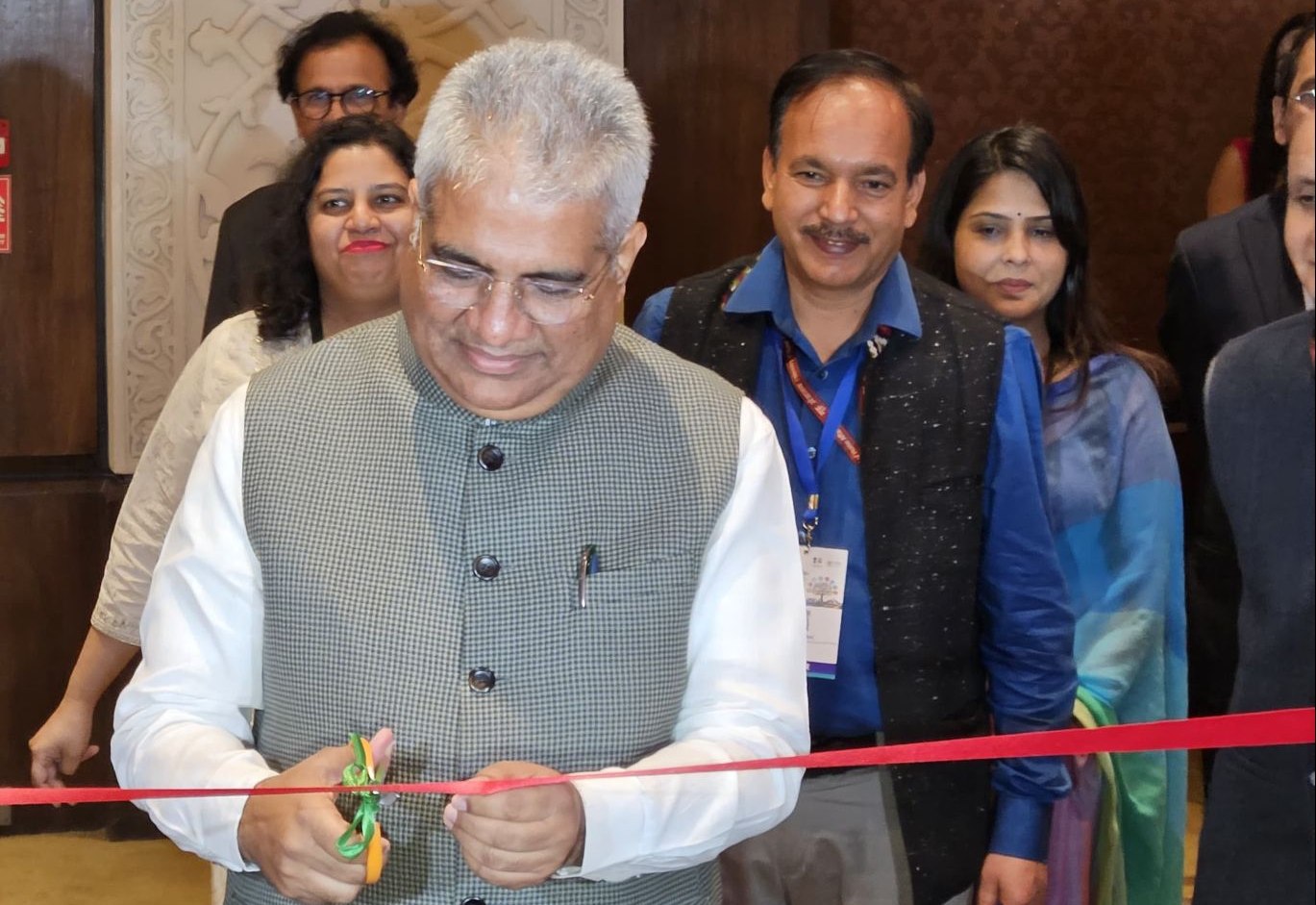
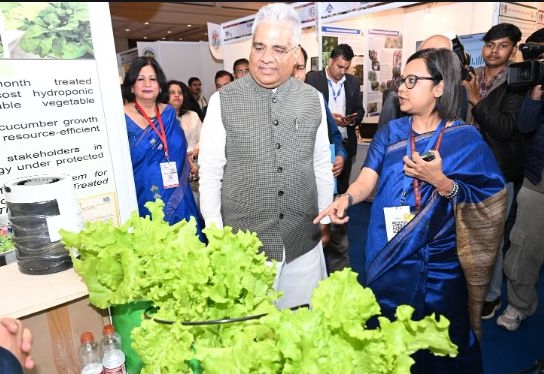
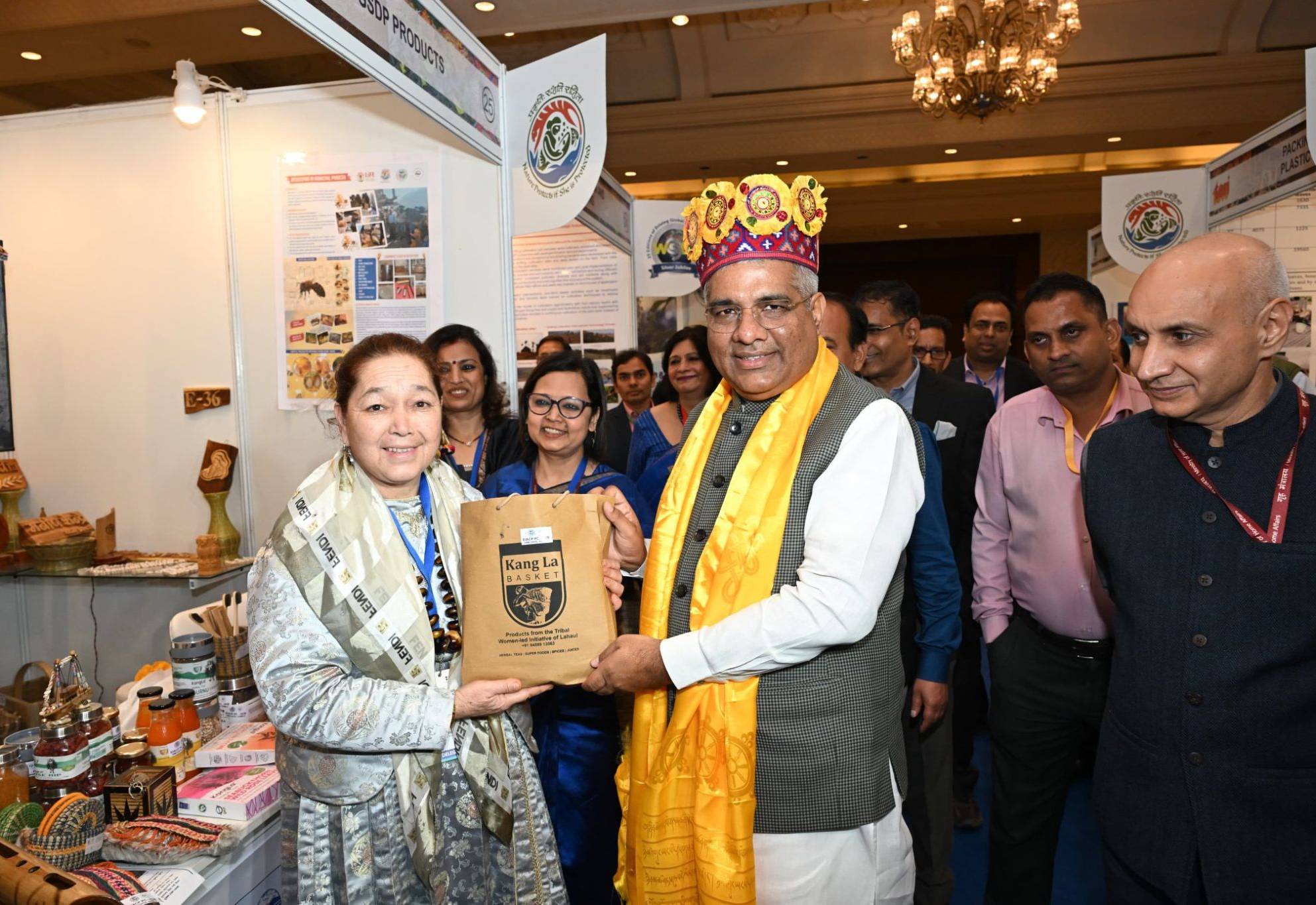
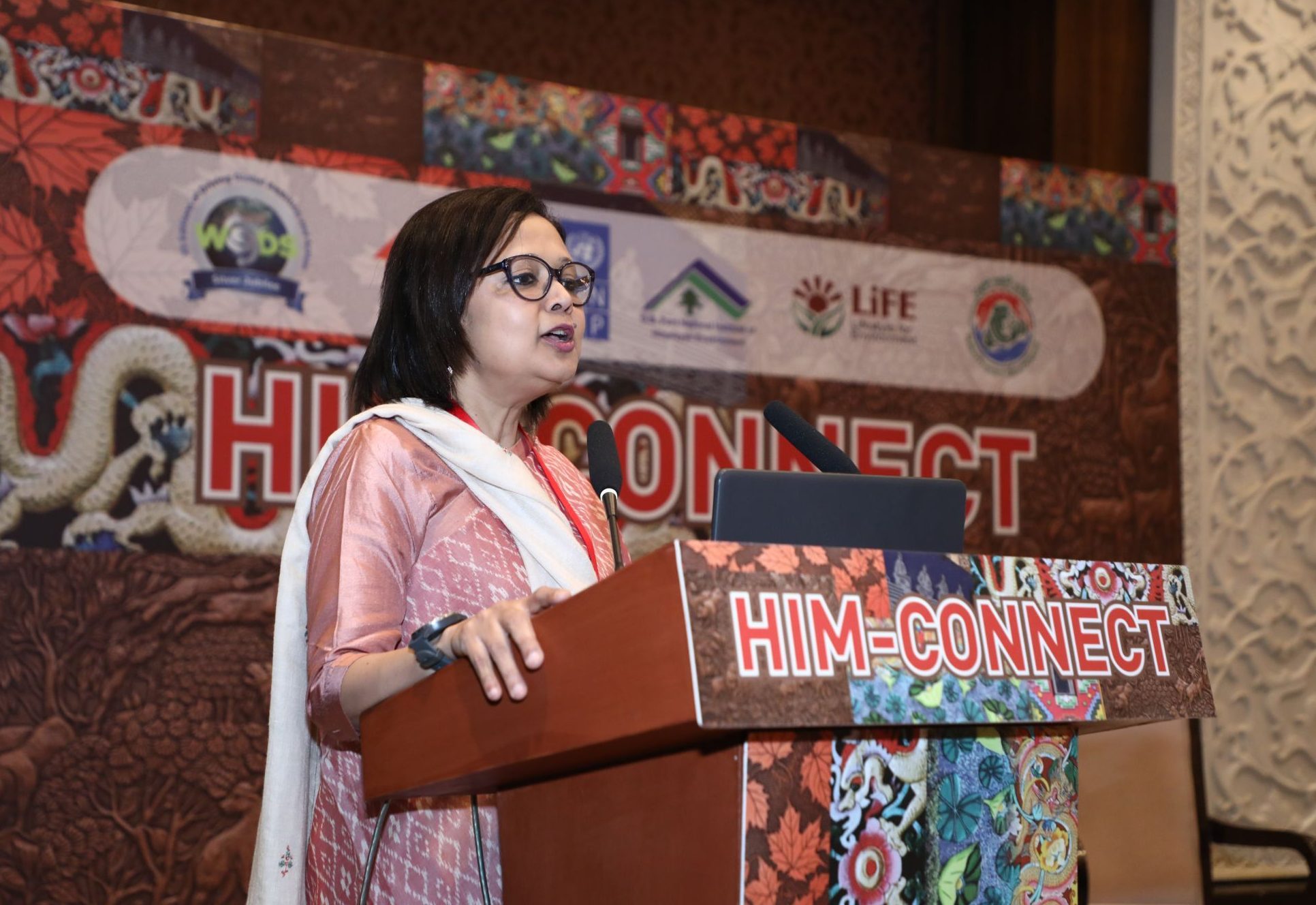
Inaugurated by the Hon'ble Union Minister MoEF&CC
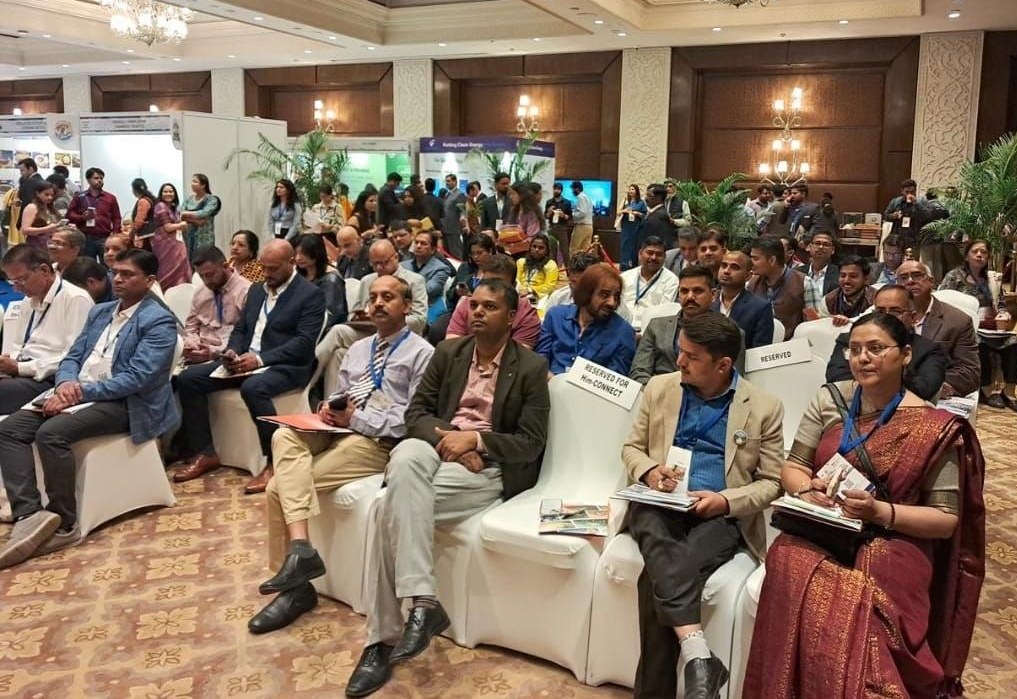
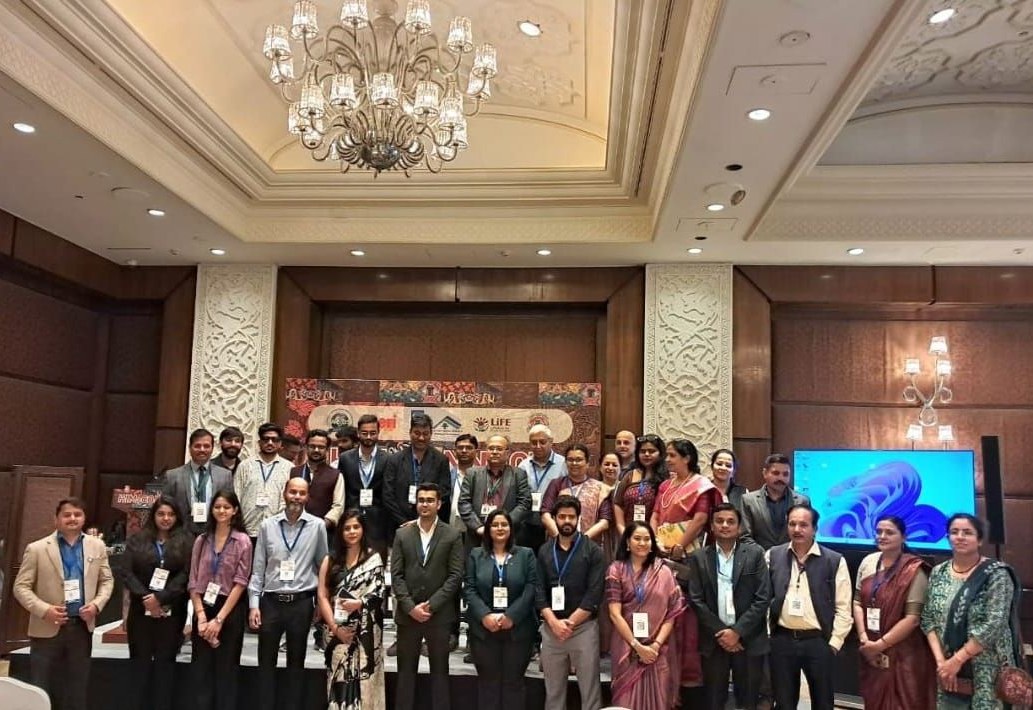
Interaction between Innovators and Investors
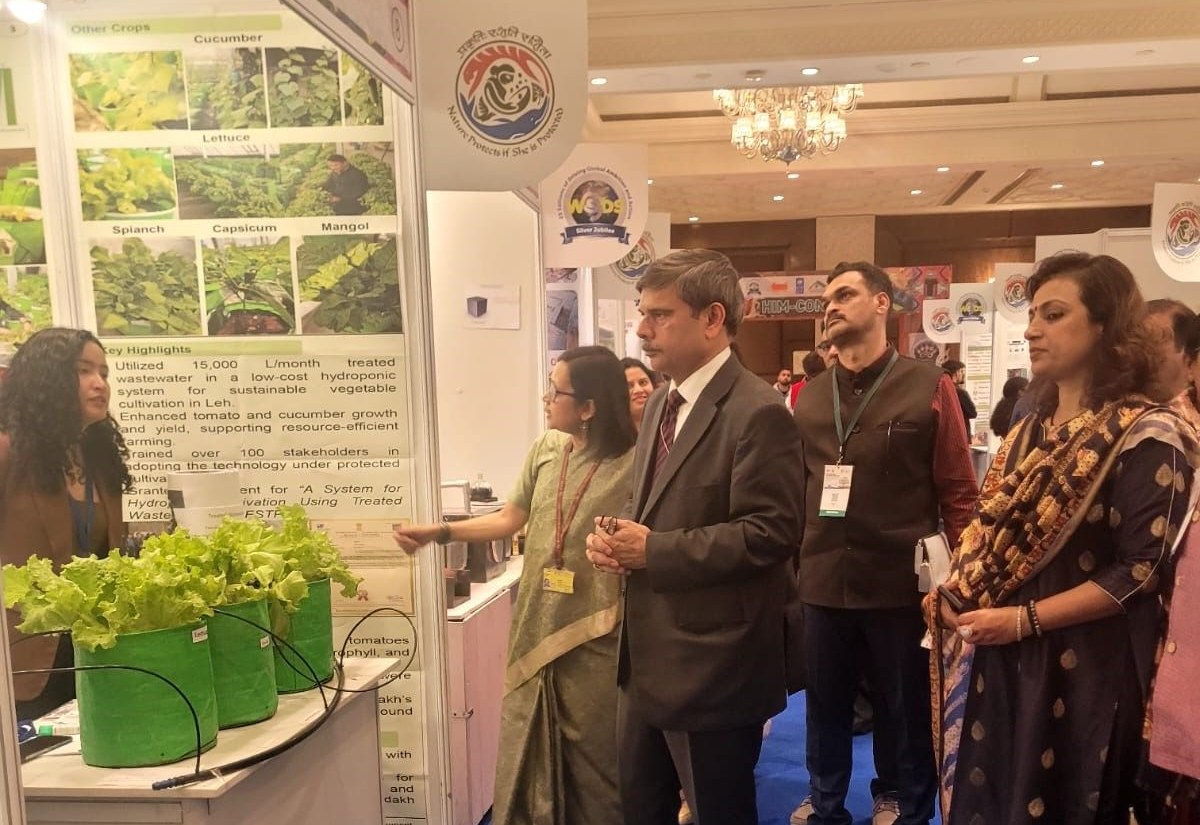
Session by the Secretary EF&CC
| Stall No. | Logo | Exhibit | Principal Investigator | Organization |
|---|---|---|---|---|
| Theme: Climate-resilient Infrastructure Development | ||||
| 1 |
|
Predictive Modeling of Rainfall-Induced Landslides in Kamand | Prof. Varun Dutt | Indian Institute of Technology (IIT), Mandi, Himachal Pradesh |
| 2 |
|
Unmanned Under Water Vehicle to measure Micro-Environment in Rivers | Prof. Subashisa Dutta | Indian Institute of Technology (IIT), Guwahati, Assam |
| 3 |

|
Eco-friendly Road Construction Technologies | Dr. Siksha Swaroopa Kar | CSIR-Central Road Research Institute (CRRI), New Delhi |
| 4 |
|
Sustainable Road Pavements using Geosynthetics | Dr. G. Bharath | CSIR-Central Road Research Institute (CRRI), New Delhi |
| 5 |
|
Disaster Resilient Housing Techniques | Dr. Aditya Singh Rajput | Indian Institute of Technology (IIT), Ropar, Punjab |
| 6 |
|
Seismic Assessment of Masonry Structures | Dr. Sanjay Chikermane | Indian Institute of Technology (IIT), Roorkee, Uttarakhand |
| Theme: Waste-to-Wealth | ||||
| 7 |
|
Up-cycling Waste Plastic into Carbon Nano-materials | Prof. Nanda Gopal Sahoo | Kumaun University, Nainital, Uttarakhand |
| 8 |

|
Use of Treated Wastewater for Vegetable Cultivation through Hydroponics | Dr. Lalit Giri | G.B. Pant National Institute of Himalayan Environment (NIHE), Almora, Uttarakhand |
| 9 |
|
Sericulture Waste into Burn Ointments | Dr. Syed Mudasir Ahmad Andrabi | Sher-e-Kashmir University of Agricultural Sciences and Technology of Kashmir, J&K |
| 10 |
|
Transforming Food Waste | Dr. Aparna Maitra Pati | CSIR-Institute of Himalayan Bioresource Technology (IHBT), Palampur, Himachal Pradesh |
| Theme: Harnessing Green Energy | ||||
| 11 |

|
Solar Water and Space Heating System | Dr. Lal Singh | Himalayan Research Group (HRG), Shimla, Himachal Pradesh |
| 12 |
|
Solar-powered Water Purification and Bio-mineralization | Dr. Jaspreet Kaur Randhawa | Indian Institute of Technology (IIT), Mandi, Himachal Pradesh |
| Theme: Innovative Water Management / Treatment Technologies | ||||
| 13 |

|
Pine Needle-based Wastewater Treatment System | Dr. Vasudha Agnihotri | G.B. Pant National Institute of Himalayan Environment (NIHE), Almora, Uttarakhand |
| 14 |
|
Solar Energy-based Portable Clean Drinking Water Treatment Unit | Dr. Anup Shukla | Indian Institute of Technology (IIT), Jammu, J&K |
| 15 |

|
Decentralized Wastewater Treatment & Reuse in Agriculture | Dr. Deepak Swamy | Indian Institute of Technology (IIT), Jodhpur, Rajasthan |
| Theme: Dairying Innovations | ||||
| 16 |
|
Mechanization of Yak Milk Cottage Cheese (Hard Churpi) Processing | Dr. Rakesh Kr. Rajgar | Central Agricultural University (CAU), Imphal, Manipur |
| 17 |
|
Interventions for Traditional Milk-based Fermented Foods | Dr. Adil Gani | University of Kashmir, J&K |
| Theme: Sustainable Utilisation of Bio-resources | ||||
| 18 |

|
Bamboo Micron Fibers (BMFs) for low-cost housing | Dr. Sudipta Halder | National Institute of Technology (NIT), Silchar, Assam |
| 19 |

|
Tea Residue for Biomass Pellets and Herbal By-products | Dr. Saikat Kumar Jana | National Institute of Technology (NIT), Yupia, Arunachal Pradesh |
| 20 |

|
Use of Packing Leaves as Substitute for Plastic | Dr. Ashish Kar | TERI, Guwahati, Assam |
| 21 |

|
Agave Plantation in Wasteland | Shri Satish Kandwal | Girish Grih Udyog Evam Resha Utpadan Samiti (GAURAS), Kimsar, Kotdwar, Uttarakhand |
| 22 | Uttarapath Sewa Sanstha | Use of Bamboo Resource and Ringal Handicrafts | Dr. Rajendra Pant | Uttarakhand Sewa Sanstha, Pithoragarh, Uttarakhand |
| 23 |

|
Livelihood Potential of Wild Growing Stinging Nettle | Dr. Vasudha Pant | Green Hills Trust, Almora, Uttarakhand |
| Theme: Agri-innovations | ||||
| 24 |
|
Shifting Cultivation Improvement & Mine Drainage Treatment | Dr. S. K. Barik | North-Eastern Hill University (NEHU), Shillong, Meghalaya |
| Environmental Information, Awareness, Capacity Building and Livelihood Programme (EIACP) | ||||
| 25 | HIMCOSTE and GSDP | Ministry of Environment, Forest and Climate Change | ||
| 26 | EIACP: Arunachal Pradesh and Assam | Ministry of Environment, Forest and Climate Change | ||
| 27 | EIACP: Sikkim | Ministry of Environment, Forest and Climate Change | ||
| 28 | EIACP: GBPNIHE | Ministry of Environment, Forest and Climate Change | ||
| Small Grants Programme | ||||
| 29 | Small Grants Programme 1 | United Nations Development Programme (UNDP) | ||
| 30 | Small Grants Programme 2 | United Nations Development Programme (UNDP) | ||