

Broad Thematic Area 7: Handling of Hazardous Substances


Broad Thematic Area 7: Handling of Hazardous Substances

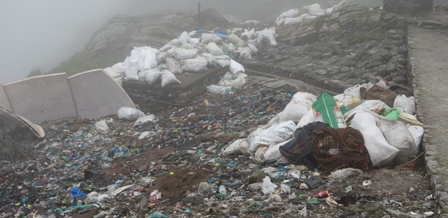
Development is quintessential for the human civilization growth, but this should not be achieved at the cost of the environment. Recent extreme climatic and anthropogenic impacts felt across the difficult States of the Indian Himalaya have raised an alarm for deciphering and implementing proactively the suitable types of the development with negligible impact on the human as well as environment. To save the Himalaya environment, a variety of strategies are being called up to deal with solid and hazardous waste with an emphasis on producing less waste and pollution by way of adopting the basic three R´s principle: Reduce, Reuse and Recycle. "Hazardous wastes" mean any waste which by reason of any of its physical, chemical, reactive, toxic, flammable, explosive, or corrosive characteristics causes danger or is likely to cause danger to health or environment, whether alone or when in contact with other wastes or substances. In many cases, this is because of a lack of knowledge about hazardous waste risks and/or result from the unsafe or improper handling of equipment as well as from improper work practices. Therefore, it needs to be monitored and controlled from the moment the waste is generated until its ultimate disposal. Moreover, efficient handling and the safe management of hazardous wastes also require an expertise in the skills and techniques of the latest innovations, which in turn are often based upon baseline data and local experiences in the region. In addition, capacity building and awareness programme concerning about hazardous wastes and its precautionary measures need to be disseminated as widely as possible. Under the NMHS, following 02 projects are ongoing, which are directly addressing the key issue "Handling of Hazardous Substances".
Overall Objectives
  1. Environmental monitoring of coal mining areas in north-eastern State and technology development for treatment of Acid Mine Drainage (AMD) and restoration of coal mine affected areas in two (2) States viz., Meghalaya and Assam;
  2. Synthesis of ´Graphene´ from the plastic waste for the energy and biomedical applications;
  3. Conversion and collection of fuel from the plastic waste for the automobile and other similar industrial applications using the same, by using specially design multipurpose incinerator (furnace);
  4. Processed semi liquid plastic to be utilized for making additives for high standard concrete;
  5. Conduct the awareness programs at the various region of project site to aware the community of that site about the hazardous effect of plastics by NGO.
NMHS Funded Projects: 29
FY 2025-26
  1. Litter Vision: Combating Plastic Waste Crisis in the Himalayan Regions with AI and IoT — The Cases of Jammu and Sikkim
  2. Circular Bioeconomy Approach towards Catalytic Transformation of Lignocellulosic/Biopolymeric Himalayan Waste into Durable & Degradable Bioplastic
  3. Decentralized Rainwater Harvesting and Greywater Treatment Using Electrocoagulation-Ceramic Membrane Systems in the Indian Himalayan Region
FY 2024-25
  1. Development of Cost-Effective Microbial Electrolysis System for Single Cell Protein Production using Wastewater for Uplifting of Himalayan Economy
  2. Development of Bioformulation for Faecal Sludge Treatment and Performance Evaluation through Pilot Scale Demonstration
  3. Assessment of Microplastic Pollution in the Agricultural Soils of Eastern Himalayan Region of Sikkim State
  4. Transforming Rural Livelihoods: Decentralized Wastewater Treatment and Effluent Reuse in Himalayan Agriculture
  5. Monitoring and Source Tracking of Microplastics by Lichens in Khasi Hills of Meghalaya
  6. Development of a Continuous Flow, Solar- based Photo- Electrochemical Small-Scale Water Purification System for Himalayan Springs
  7. Best of Waste: Transforming Food Waste to Microbial Bioformulation for Boosting Plant Growth
FY 2023-24
  1. Rejuvenation of Used Lithium-ion Batteries by Gel Addition Process: A novel recycling plan
  2. Reclamation of Dumping Sites in Different Regions of Uttarakhand Himalaya by Enhancing the Bioremediation Potential of Selected Microbes
  3. Microbial Assisted Bio/ Phytoremediation of Municipal Waste Dump Sites in the Central Himalaya
  4. Technological Interventions for the Efficient Utilization of Sericulture Waste for the Development of Burn Ointments: An entrepreneurial step in rural livelihood
  5. Sustainable Restoration of Agricultural Soils contaminated with Complex Hydrocarbon Pollutants of "Produced-Water" through Rhizoremediation
FY 2022-23
  1. Advanced microalgal biorefinery approach for recycling of domestic sewage/wastewater for cleaner and greener Himalayan region
  2. Purification and Valorization through Indigenous Tailoring of Raw Polymeric waste into Advanced Multidimensional Carbon Nano Materials (PAVITRAM) for Large Scale Energy Storage applications including Supercapacitors and Batteries
  3. Integrated Scientific Solutions for Improving Legacy Municipal Solid Waste Management in the Indian Himalayan Region
  4. Design and Development of Pine Needle Biochar-infused Microbial Consortia-based Hybrid Bio-Tubes for Effective Treatment of Polluted Water
  5. Development of Novel Adsorbent and Prototyping of Powerless Water Filter
  6. Exploring the Use of Treated Wastewater for Vegetable Cultivation through Hydroponic in Ladakh UT
  7. Eco-Friendly Identifier: A Handheld Plastic Type Detector - An AI- enabled Portable Solution for Identifying Plastic Polymers
F Y 2019-20
  1. My Waste My Wealth - A proposal for setting up 8 Pilot micro demonstrations Solid Waste management Plan with financial and Social Sustainability on Multi-dimensional, coordinated approach
F Y 2018-19
  1. Harnessing the destructive energy in pine needles – demonstration units of electricity and charcoal generation from pine needles and study their socio-economic environmental impact on community in selected villages and economic viability for scaling in the Himalayan ecosystem.
  2. Pine Needle Based Wastewater Treatment System for Recycling of Domestic Waste Effluents.
  3. Distribution and quantification of organic contaminants and micro-plastic concentrations in lake systems from Himachal Pradesh, India.
  4. Study of Arsenic and Other Water Contaminants in Uttarakhand State.
F Y 2015-16
  1. Technology development, management, and long-term monitoring of shifting cultivation and coal mining in north-eastern India.
  2. Environmentally sustainable smart synthesis of carbon-nano material along with the production of high value added fuel and additives for the concrete mixture from waste plastic, hazardous waste around the Himalayan region.
Measurable Targets up to 2020
Monitoring Indicators
No of new methods for waste hazardous waste management in the Himalaya
No. of Policy drafts and other knowledge products developed.
No. of Stakeholders benefitted (No. of rural youth, No. of women, and total no. of Beneficiaries);
No. of Capacity building programmes conducted.
Deliverables
Alternate Model Development for Acid Mine Drainage (AMD)
New optimized method to synthesize CNMs, value added fuel and concrete at very low prices.
Quantity of solid waste processed per day.
Municipality/Community groups will be trained.
10 Awareness camps/programs will be organized.
Achievements till date ...
Treatment model developed for Acid Mine Drainage (AMD) in 3 selected sites: Mawblang and Khulia villages (Meghalaya) and Batt village (Arunachal Pradesh).
The SWAYMBHU-WRM-2021 (recycling machine) developed for mass scale production of Graphene and Graphene oxide sheets.
One (1) Innovative technology has been developed for utilizing secondary stage plastic (semi liquid plastic) for making additives for high standard concrete at laboratory scale.
Technology transfer of bulk Graphene production from waste plastic to industry "HEXORP PVT. Limited" through NRDC and Ministry of Environment, Forest and Climate Changes
Filed 02 Patents for waste management model
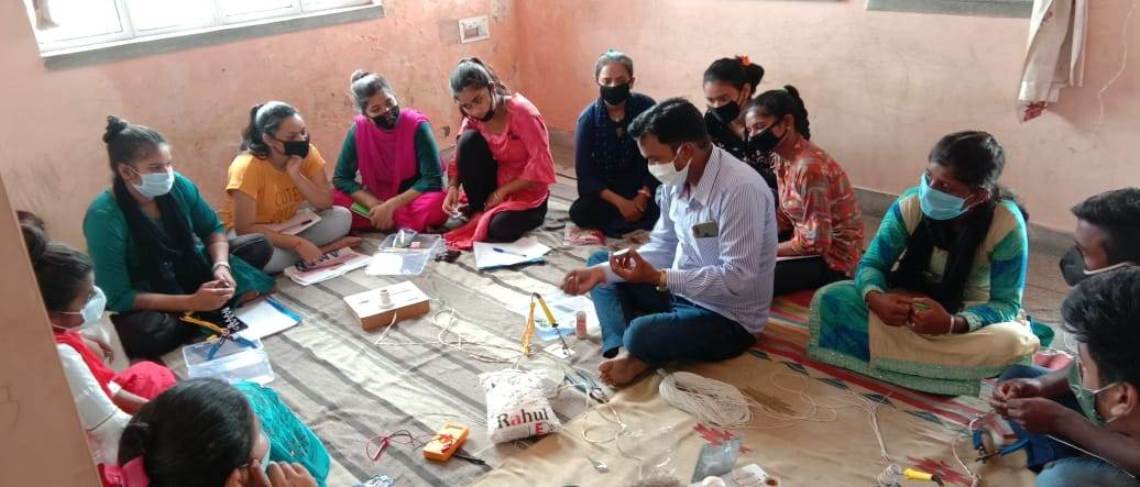
15 Awareness programs on "Plastic Jagrukta Abhiyan" have been conducted in Nainital and Pithoragrah districts.
26 trainings conducted with 502 general beneficiaries; 490 ST community people, including 257 women participants;
Three (03) workshops have been organized on solid waste management.
Total 14 research papers (4 Journal and 10 conference proceeding) have been published.
Website Hits:
Unique Visitor:
Last Update: 04.06.2026
Contact Us |   Designed, Developed & hosted by NMHS-PMU