Broad Thematic Area 5: Infrastructure Development


Broad Thematic Area 5: Infrastructure Development

Significance of Infrastructure Development in the India Himalayan Region (IHR)
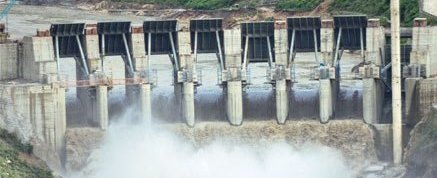
In Himalayan region, many infrastructures-physical structures such as dams, hydropower projects, unscientific ways of building road and hotels, tunnels etc. have been constructed so far that provide the underpinnings for the modern society. Hence, it is necessary part of the development associated with a growing human population, which also lead to development of ancillary industries, communication routes, transportation, tourism and other development work in the area, but it can also have devastating impact on the environment. Additionally, devastating impact of climate change is also seen with disastrous cloudbursts and floods taking place with increasing frequency in this region. In this context, there is need to adopt an alternative model which will ensure economic security of the local communities, alternative sources of energy, encourage indigenous knowledge and methods of organic agriculture, support eco-tourism, afforestration etc. In this direction, the following 12 projects are ongoing under the NMHS, which aims to directly address alternative field/demonstration models/techniques in the mountain region.
Overall Objectives
  1. Study the impacts of renewable energy projects and its effectiveness as an adaptation and mitigation strategy for the Ladakh region.
  2. Design and formulate effective environmental management strategies and devise strategies to enhance human ecosystem processes for the Ladakh region;
  3. Demonstration of low cost and durable model house using bamboo bricks/laminates;
  4. Development of landslide early warning system for its societal use;
  5. Preparation of digital database dedicated to the indigenous knowledge system;
  6. Development of scientific and sustainable strategies for cultivation and harvesting of bio-resources;
  7. Development of value added products;
  8. Development of communication network using LoRa technique;
  9. Development of a Web/App based Graphical User Interface (GUI) and interactive map.
NMHS Funded Projects: 21
FY 2024-25
  1. A Decision Support Framework for Infrastructure and Operational Planning of Electric Freight considering Disaster Vulnerability and Topography in an Indo- Himalayan Region
  2. Grid-Connected Rural Micro- Grid with Solar Energy-based Portable Clean Drinking Water Treatment Unit
  3. Cost-effective Safety Solution for Low-rise Masonry Dwellings Subjected to Rock Fall Impact Induced by Landslides: Laboratory Testing, Field Demonstration and Development of Guidelines for Hilly Regions
  4. Development of Solar Power-based Mechatronics Prime Mover for Agricultural Operations in Hills
FY 2023-24
  1. Design and Development of Renewable Energy Powered Bakery Unit for Skill Development and Employment Generation in Himalayan Region
  2. Community based Microencapsulated Phase Change Materials (MPCM) Assisted Hybrid Solar Agro-Processing Centers
FY 2022-23
  1. Mainstreaming passive solar heated buildings in the Indian Himalayan Region: Integrating science with traditional practices to enhance climate resilience
  2. Revival of Climate cum Disaster Resilient Vernacular Housing Techniques of the North-Western Indian Himalayan Region: Documentation, Investigation, and Knowledge Dissemination
F Y 2020-21
  1. Green technology for detection of Leakage & Heavy Metals and prevention of choking in pipe networks and its demonstrations in Himalayan setups.
F Y 2019-20
  1. Identification of vulnerability and potential risk factor zone at district and village level in Manipur.
F Y 2017-18
  1. Conservation of traditional buildings and dissemination of traditional knowledge while simultaneously generating alternate livelihood opportunities.
  2. Evaluation and design of low cost ground instrumentation with real time monitoring for the development of Landslide Early Warning System (LEWS).
  3. Documentation of Indigenous knowledge system of selected major tribes of Arunachal Pradesh and the relevance of Intellectual property right to IKS.
  4. Development of Sustainable Rural Livelihood Options Utilizing Locally Available Bio-resources through Transformative Rural Technologies in the Indian Himalayan Regions of Himachal Pradesh and Sikkim.
  5. Sustainable Tourism and Revival/ Preservation of Hill Cultures and Ecology in abandoned villages of Uttarakhand: A pilot project.
  6. Technological Interventions and Their Application for Sustainable Livelihood of Women Folk Involved in the Production of Various Traditional Milk-based Fermented Foods of Himalayan Belt of J&K.
  7. Development of sustainable technology for production of biomass pellet based fuel and herbal by-product from residue of pruned tea plant: Augmenting rural development.
  8. Cloud-assisted Data Analytics based Real-Time Monitoring and Detection of Water Leakage in Transmission Pipelines using Wireless Sensor Network for Hilly Regions.
  9. Remote Monitoring and Control for Smart Agriculture with Internet of Things (IOT) in North-East (NE) Region of India.
F Y 2016-17
  1. Study and Monitoring of Climate Change Impacts and Health of the Environment of the Trans Himalayan Region of Ladakh and the Designing of Effective Development Strategies and Interventions for Adaptation and Mitigation.
  2. Bamboo bricks/laminates from BMFs (Bamboo Micron Fibres) for low cost housing structures for North Eastern Himalayan region.
Measurable Targets up to 2020
Strengthening of delivery systems of appropriate Rural Technologies through skill enhancement.
Increased, improved and alternate livelihood options for 10000 farmers, particularly marginal and BPL ones and weaker sections.
9 more RTCs established at regional centres of GBPNIHESD and partners (09 states).
Adoption/adaptation of 120 tested options/technologies for improved livelihood.
Support to Integrated Eco development Research Program.
Land management practices for improved livelihoods.
Documenting and valuing traditional ecological knowledge and practices.
Database on IKS from IHR states on 4 thematic areas and exploring possibility of IPR value.
Strengthening and upscaling of 24 important traditional practices and knowledge from IHR states.
Continuation of extramural funding to different Institutions/Universities/NGOs for the support of at least 40 location-specific R&D activities.
Monitoring Indicators
YRFs organized (Nos.).
No. of policy briefs developed.
Awareness and Capacity Building events all across IHR States (Nos.).
Compendium developed on mountain-specific policies and practices (Nos.).
Assessment report/ Manuals prepared (Nos.).
Customized ToTs modules developed (Nos.).
Training of Trainers (ToTs) mode capacity building programs conducted (Nos./participants).
Coordination Framework for Data Centres on CC for states (Nos.).
Thematic Training Tools/Manual - DRR & P&M/ Guidebook prepared (Nos.).
Bamboo Houses Constructed and Demonstrated (Nos.).
Field models of micro-enterprises on Low-Cost Bamboo Preservation Technologies developed (No.).
Socioeconomic upliftment of Hill Communities (Rs/Capita).
No. of new farm based enterprises developed.
Income enhancement of villagers (Rs./Capita).
No of micro-entrepreneurs developed.
Skill building of women farmers (Nos.).
Skill enhancement of Lakshya Cooperative and business growth with marketing (Rs)
Deliverables
Periodic organization of Young Researchers' Forums for all 12 IHR states, followed by YRF Series Publication.
11 Policy Briefs covering gaps and recommendations for rectification (11 Newsletters).
A Compendium of IHR Best Practices linking Climate Change to Sustainable Development.
Awareness generated (student Nos.), villages/local bodies (Nos.), Officials (Nos.)
Community Risk Registers Developed (Nos.)
State-level, National-level, and International-level Conferences organized (Nos./participants).
Healthy and Resilient Ecosystem Development Plan for 15-20 villages
Intensive livelihood/ ecosystem restoration activities in 15-20 villages.
A Compendium on Supplementary Rural Livelihood Options along with Policy.
Recommendation to Check Outmigration and Women Drudgery in the Target Hill Region.
Develop community risk registers for 50 target villages and local bodies.
Customized ToTs modules as per the need of stakeholders for 4 states.
Trained government officers, Rural development functionaries, Range Officers, Foresters, Forest Guards, Van Panchayats, School teachers, Students, Public Representatives and officials of other line departments.
Framework for user friendly and comprehensive database for 4 states.
Thematic Training Tools/Manual - DRR & P&M/ Guidebook prepared (Nos.).
Action Plan for Conservation and utilization of ecosystem services of Lakes (with specific Objectives, Monitoring Indicators, and Measurable Outcomes).
Trainings on Skill Upgradation and Capacity Building of Hill Communities (500 target users on bamboo preservation techniques).
Setting up of 2 micro-enterprises in two project sites and establishment of "Bamboo Treatment Centres".
Entrepreneurship Development through Livelihood--Environment convergent models and DRR models in participatory manner.
6 Bamboo houses to be constructed and demonstrated and manual developed.
Achievements till date ...
Total 505 Skill development/Training Program organized and participated by 24989 beneficiaries on different issues like Water management, Management of NTFP, Low cost Bamboo treatment, Medicinal plant cultivation, Horticulture Skills, Mushroom Cultivation, Saffron Cultivation, Solar energy, Honey Bee Keeping’, Plant Taxonomy, GIS Mapping, etc.
Total 331 workshop and Awareness Program are organized with >12000 participants on-Spring Rejuvenation, Organic farming, Biodiversity Conservation, Disaster Bamboo Treatment Method, Restoration of ecosystem services, etc.
Conducted 17 trainings on fruit processing in 12 hamlets (participated by 300 local people) -Uttarakhand
More than 40 technologies were successfully demonstrated to village communities in Uttarakhand and HP
59 small micro-enterprises initiated - Wild edible produces, medicinal plant cultivation, cut flower/saffron farming, Organic farming, Eco-tourism, Low Cost Solar Water Heater, Apple cultivation, Bamboo treatment, Mushroom Cultivation, Women based milk dairy, orchid cultivation, Fish Pen culture, Bee Keeping, Pine Needles Biomass Gasification Based Electricity Generation, Fiber based products, etc. (Total >31,000 beneficiaries from 177 Villages)-09 IHR states
Developed earthquake resilient housing structure model by using treated bamboo in Tripura
Healthy and resilient ecosystem development plans developed for 6 village sites and also developed the indicators of a resilient village ecosystem at the individual and Community level in Uttarakhand
Total 196 farmers (15 Village) of High altitude area of Uttarakhand have cultivated the MPs in 12.84 Ha land (Net income Rs 34000-67000/ farmer)
Under Intensive livelihood/ ecosystem restoration activities following interventions has been done in Uttarakhand:
  1. Established Web of water tanks (322 Nos/10,000 litters each) for ensuring the water security of 12 villages
  2. Polyhouses construction for off seasons (43 no in 03 Village)
  3. Plantation of fodder, and fruit trees (~30000 no.)
  4. Established one (1) restaurant managed by women
Website Hits:
Unique Visitor:
Last Update: 04.06.2026
Contact Us |   Designed, Developed & hosted by NMHS-PMU