Broad Thematic Area 6: Physical Connectivity


Broad Thematic Area 6: Physical Connectivity

Significance of Physical Connectivity in the India Himalayan Region (IHR)
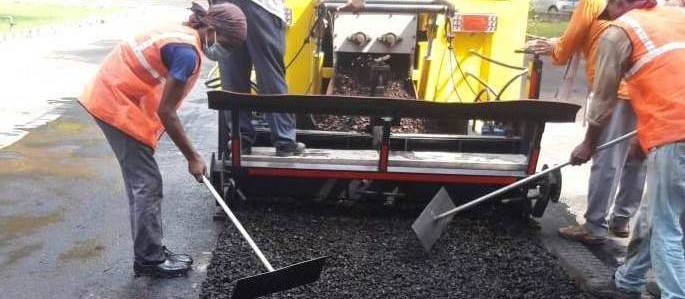
Good physical transport connectivity is most important infrastructure for country progress. However, in the mountain region, road is the only viable means of transportation. But, construction and maintenance of hill and mountain road are often challenged by its topography, fragile geological conditions, and climate conditions. The conventional road often causes of landslides, deforestation, increase slope instability, air pollution, deterioration ecosystem etc. Additionally, this region has lower population density and lacks basic infrastructural facilities available in plain terrain. Hence, an adequate and long lasting road network is very much necessary in Himalayan areas for overall development of the region as well as fulfilling defence needs. The present specialized techniques such as Safer Road, Green Road can be used to alleviate above problems. These technologies follow the philosophy of promoting energy-efficient and minimum disruption to existing vegetative cover and re-utilization of the excavated materials as construction material. Other advantages are stabilizing the roadside slopes, reduce soil erosion, off-farmer employment opportunities, less transportation cost etc. In this direction, the following 06 projects are ongoing under the NMHS, which aims to directly address alternative transport connectivity in mountain region.
Overall Objectives
  1. Addressing the problem of locally available materials and enhancing their performance by means of geo-synthetics;
  2. Providing satisfactory pavement composition for roads constructed at high altitudes using locally available/marginal materials.
  3. GIS based database with respect to road network, settlement locations with demographic details and crash data of Tripura State
  4. Development of various indices to assess the ease of reaching at various facilities desired by residents within settlement or at nearby major settlements through safe road connectivity.
NMHS Funded Projects: 08
FY 2025-26
  1. Development of Access Indices and Dynamic Route Optimization for Safe Facility Reachability During Disasters Using GIS-Traditional Knowledge (GIS-TK) in Nagaland
FY 2022-23
  1. Cold Application of 'Engineering Muck Material' in Road Construction
F Y 2019-20
  1. Analysis of Evacuation Options considering Citizen Mobility Patterns and Disaster Vulnerability in a Himalayan Region Transportation Network
  2. Travelers' trip patterns and its implications on public transport services in Imphal, India
F Y 2018-19
  1. Towards climate responsive and low carbon development: Addressing the Critical Urban Issues in Residential and Transport sector in Uttarakhand.
  2. Application of Cold Bituminous Based Eco-friendly Road Building Technology for the Special Featured Himalayan Regions.
F Y 2017-18
  1. Sustainable road pavements in high altitude regions using geosynthetics.
  2. Safe road connectivity for Tripura State of north region of India.
Measurable Targets up to 2020
Strengthening of delivery systems of appropriate Rural Technologies through skill enhancement.
Increased, improved and alternate livelihood options for 10000 farmers, particularly marginal and BPL ones and weaker sections.
9 more RTCs established at regional centres of GBPNIHESD and partners (09 states).
Adoption/adaptation of 120 tested options/technologies for improved livelihood.
Support to Integrated Eco development Research Program.
Land management practices for improved livelihoods.
Documenting and valuing traditional ecological knowledge and practices.
Database on IKS from IHR states on 4 thematic areas and exploring possibility of IPR value.
Strengthening and upscaling of 24 important traditional practices and knowledge from IHR states.
Continuation of extramural funding to different Institutions/Universities/NGOs for the support of at least 40 location-specific R&D activities.
Monitoring Indicators
YRFs organized (Nos.).
No. of policy briefs developed.
Awareness and Capacity Building events all across IHR States (Nos.).
Compendium developed on mountain-specific policies and practices (Nos.).
Assessment report/ Manuals prepared (Nos.).
Customized ToTs modules developed (Nos.).
Training of Trainers (ToTs) mode capacity building programs conducted (Nos./participants).
Coordination Framework for Data Centres on CC for states (Nos.).
Thematic Training Tools/Manual - DRR & P&M/ Guidebook prepared (Nos.).
Bamboo Houses Constructed and Demonstrated (Nos.).
Field models of micro-enterprises on Low-Cost Bamboo Preservation Technologies developed (No.).
Socioeconomic upliftment of Hill Communities (Rs/Capita).
No. of new farm based enterprises developed.
Income enhancement of villagers (Rs./Capita).
No of micro-entrepreneurs developed.
Skill building of women farmers (Nos.).
Skill enhancement of Lakshya Cooperative and business growth with marketing (Rs)
Deliverables
Periodic organization of Young Researchers' Forums for all 12 IHR states, followed by YRF Series Publication.
11 Policy Briefs covering gaps and recommendations for rectification (11 Newsletters).
A Compendium of IHR Best Practices linking Climate Change to Sustainable Development.
Awareness generated (student Nos.), villages/local bodies (Nos.), Officials (Nos.)
Community Risk Registers Developed (Nos.)
State-level, National-level, and International-level Conferences organized (Nos./participants).
Healthy and Resilient Ecosystem Development Plan for 15-20 villages
Intensive livelihood/ ecosystem restoration activities in 15-20 villages.
A Compendium on Supplementary Rural Livelihood Options along with Policy.
Recommendation to Check Outmigration and Women Drudgery in the Target Hill Region.
Develop community risk registers for 50 target villages and local bodies.
Customized ToTs modules as per the need of stakeholders for 4 states.
Trained government officers, Rural development functionaries, Range Officers, Foresters, Forest Guards, Van Panchayats, School teachers, Students, Public Representatives and officials of other line departments.
Framework for user friendly and comprehensive database for 4 states.
Thematic Training Tools/Manual - DRR & P&M/ Guidebook prepared (Nos.).
Action Plan for Conservation and utilization of ecosystem services of Lakes (with specific Objectives, Monitoring Indicators, and Measurable Outcomes).
Trainings on Skill Upgradation and Capacity Building of Hill Communities (500 target users on bamboo preservation techniques).
Setting up of 2 micro-enterprises in two project sites and establishment of "Bamboo Treatment Centres".
Entrepreneurship Development through Livelihood--Environment convergent models and DRR models in participatory manner.
6 Bamboo houses to be constructed and demonstrated and manual developed.
Achievements till date ...
Total 505 Skill development/Training Program organized and participated by 24989 beneficiaries on different issues like Water management, Management of NTFP, Low cost Bamboo treatment, Medicinal plant cultivation, Horticulture Skills, Mushroom Cultivation, Saffron Cultivation, Solar energy, Honey Bee Keeping’, Plant Taxonomy, GIS Mapping, etc.
Total 331 workshop and Awareness Program are organized with >12000 participants on-Spring Rejuvenation, Organic farming, Biodiversity Conservation, Disaster Bamboo Treatment Method, Restoration of ecosystem services, etc.
Conducted 17 trainings on fruit processing in 12 hamlets (participated by 300 local people) -Uttarakhand
More than 40 technologies were successfully demonstrated to village communities in Uttarakhand and HP
59 small micro-enterprises initiated - Wild edible produces, medicinal plant cultivation, cut flower/saffron farming, Organic farming, Eco-tourism, Low Cost Solar Water Heater, Apple cultivation, Bamboo treatment, Mushroom Cultivation, Women based milk dairy, orchid cultivation, Fish Pen culture, Bee Keeping, Pine Needles Biomass Gasification Based Electricity Generation, Fiber based products, etc. (Total >31,000 beneficiaries from 177 Villages)-09 IHR states
Developed earthquake resilient housing structure model by using treated bamboo in Tripura
Healthy and resilient ecosystem development plans developed for 6 village sites and also developed the indicators of a resilient village ecosystem at the individual and Community level in Uttarakhand
Total 196 farmers (15 Village) of High altitude area of Uttarakhand have cultivated the MPs in 12.84 Ha land (Net income Rs 34000-67000/ farmer)
Under Intensive livelihood/ ecosystem restoration activities following interventions has been done in Uttarakhand:
  1. Established Web of water tanks (322 Nos/10,000 litters each) for ensuring the water security of 12 villages
  2. Polyhouses construction for off seasons (43 no in 03 Village)
  3. Plantation of fodder, and fruit trees (~30000 no.)
  4. Established one (1) restaurant managed by women
Website Hits:
Unique Visitor:
Last Update: 08.06.2026
Contact Us |   Designed, Developed & hosted by NMHS-PMU